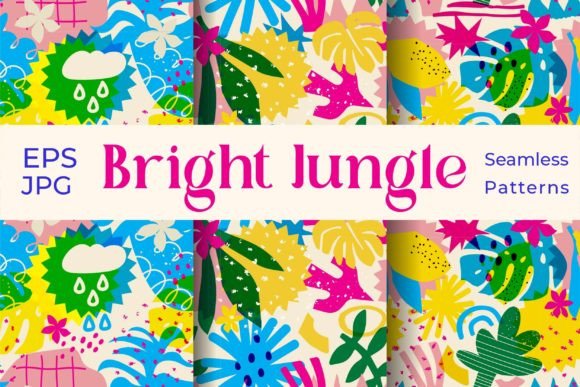
Patterns PNG: Unlocking Versatile, High-Fidelity Design Assets for Every Creator
Patterns PNG refers to a category of digital design resources—repeating or non-repeating visual motifs—distributed in the Portable Network Graphics (PNG) format. Unlike generic stock graphics, these assets are engineered for precision: they retain crisp edges, support full alpha transparency, and scale cleanly within modern design workflows. What makes Patterns PNG especially valuable is not just their format—but how they integrate across disciplines. From UI designers building responsive web interfaces to educators crafting printable classroom materials, from textile entrepreneurs prototyping fabric prints to researchers visualizing data layers, these assets serve as foundational building blocks grounded in technical reliability.
Why File Format Choice Matters More Than You Think
The phrase “these designs are available in the following file formats: SVG, EPS, PNG, transparent background” signals more than convenience—it reflects intentional versatility. Each format serves distinct functional needs:
- SVG (Scalable Vector Graphics): Ideal for web-based interfaces, logos, and icons that must scale infinitely without pixelation. Best when patterns require dynamic color shifts via CSS or need to adapt responsively across screen sizes.
- EPS (Encapsulated PostScript): A legacy vector standard still required by some professional print services and older desktop publishing tools. Useful for high-resolution offset printing where CMYK separation and spot-color fidelity are critical.
- PNG (Portable Network Graphics): The workhorse for raster-based applications. Offers lossless compression, 24-bit color depth, and crucially—full alpha channel support. This means no white boxes, no jagged edges, no manual masking: just clean, ready-to-layer pattern overlays.
- Transparent Background: Not a format itself, but a defining attribute baked into properly exported PNGs (and often SVG/EPS). It enables seamless compositing over photos, gradients, videos, or complex layouts—without clipping masks or blending modes.
A designer choosing Patterns PNG over JPEG isn’t making an aesthetic preference—they’re selecting interoperability. PNG preserves hard-edged geometry essential for geometric tessellations, ensures soft gradients render consistently across browsers, and avoids compression artifacts that distort subtle texture variations in organic or noise-based patterns.
Educators and Instructional Designers
In learning material development, Patterns PNG serve dual roles: as subtle background textures for slide decks (reducing visual fatigue while maintaining readability), and as tactile-ready assets for printable worksheets. A math teacher might overlay a hexagonal grid pattern—exported as PNG with transparency—onto a coordinate plane activity. Because the background remains fully transparent, students can annotate directly over the grid using digital ink tools without obscuring underlying structure. Similarly, early literacy resources use polka-dot or stripe patterns in pastel tones to create visual rhythm on phonics flashcards—printed reliably at 300 DPI without banding or dithering.
Web and App Interface Designers
Modern UI frameworks increasingly rely on layered, context-aware visuals. A dashboard displaying real-time analytics may apply a low-opacity diagonal line pattern (as a PNG overlay) behind time-series charts—not for decoration, but to improve perceptual grouping of related data points. Because the pattern uses transparency, it adapts gracefully to both light and dark mode without requiring separate asset versions. Likewise, mobile app onboarding screens often integrate animated pattern reveals: a static PNG layer fades in beneath a headline, creating depth without triggering layout shifts or excessive GPU load.
Product and Packaging Developers
When prototyping physical goods—especially textiles, stationery, or consumer electronics casings—Patterns PNG accelerate iteration. A product designer working on a sustainable bamboo laptop sleeve imports a woven-texture pattern (in PNG with transparency) into Adobe Dimension. They map it onto a 3D model, adjust opacity to simulate fabric weight, and export photorealistic mockups—all without converting to flattened JPGs or wrestling with vector path complexity. For packaging, a food brand testing matte-finish cereal boxes applies a subtle rice-paper grain pattern as a multiply blend layer atop nutritional label mockups—ensuring accurate tonal interaction before committing to expensive plate proofs.
Researchers and Data Visualizers
In academic publishing and scientific communication, clarity trumps ornamentation—but strategic patterning enhances distinction. Consider a comparative genomics study illustrating gene expression clusters. Instead of relying solely on color coding—which fails for colorblind readers—researchers embed Patterns PNG as fill textures within bar segments: crosshatch for upregulated genes, concentric circles for downregulated, stipple for neutral. These raster patterns remain legible when converted to grayscale for journal submission and survive PDF compression without distortion. Crucially, because each pattern is delivered in multiple formats, the same visual logic can be implemented in R (via PNG import), Python (matplotlib image overlays), or Illustrator (for final figure assembly).
Technical Considerations That Impact Usability
Not all Patterns PNG are created equal. Three attributes determine real-world utility:
- Tile Integrity: Seamless tiling is non-negotiable for backgrounds. A well-constructed pattern repeats edge-to-edge without visible seams—even when scaled or rotated. Poorly aligned tiles become glaringly obvious when applied across full-browser-width hero sections or large-format prints.
- Resolution & Pixel Density: While PNG is resolution-independent in theory, its raster nature means output quality depends on source dimensions. Patterns PNG intended for retina displays should originate at 2x or 3x base size (e.g., 2000×2000 px for a 1000×1000 px display area). Conversely, patterns meant for small UI elements (like button hover states) benefit from tightly cropped, minimal-file-size variants.
- Color Profile Consistency: RGB vs. sRGB handling affects how patterns appear across devices. Professionally distributed Patterns PNG use embedded sRGB profiles—ensuring consistent rendering whether viewed on a MacBook Pro, a budget Android tablet, or a calibrated Eizo monitor. This matters especially for brand-aligned patterns where exact Pantone-equivalent hues must translate faithfully.
Transparency implementation also varies. Some creators export with “soft matte” edges that blend poorly against dark interfaces; others use binary alpha (fully opaque or fully transparent pixels), which preserves sharpness but limits subtle fade effects. Understanding this distinction helps users select the right variant for their specific composite environment—whether it’s After Effects motion graphics, Figma auto-layout frames, or Canva social media templates.
Workflow Integration: How Patterns PNG Fit Into Modern Creative Pipelines
Designers rarely use Patterns PNG in isolation. Their strength lies in composability:
- In Figma, PNG patterns are dragged directly onto frames and set to “Fill” with “Repeat” enabled—no plugins needed. Adjusting scale or rotation updates all instances globally via component properties.
- In Adobe Photoshop, they function as smart objects: double-click to edit the original pattern, then save to update every linked instance across layers and documents.
- In Web Development, CSS supports PNG patterns natively via
background-image: url(...), withbackground-repeatandbackground-sizeoffering precise control. Combined withbackground-blend-mode, they enable sophisticated layering—such as a linen texture (PNG) blended with a gradient overlay to simulate tactile depth. - In Print Production, high-res PNGs imported into InDesign retain transparency and align precisely with bleed and slug areas—critical when patterns wrap around book covers or extend into die-cut zones.
This cross-platform resilience explains why Patterns PNG have become de facto standards in collaborative environments. A marketing team can share a single ZIP containing SVG (for email headers), EPS (for vendor sign production), and PNG (for social ads)—knowing each stakeholder accesses the optimal variant for their toolchain, all derived from the same source artwork.
Emerging Trends Shaping Pattern Usage
Two developments are expanding how Patterns PNG are leveraged:
First, adaptive pattern systems. Rather than static files, forward-thinking studios now distribute pattern libraries with parametric controls—adjusting scale, spacing, or hue shift via JSON configuration. The underlying PNG assets remain unchanged, but front-end code dynamically generates optimized variants on-demand, reducing HTTP requests and improving Core Web Vitals.
Second, AI-assisted pattern generation is shifting creative roles. Tools can now ingest a single PNG swatch and extrapolate infinite variations—altering symmetry, introducing controlled randomness, or adapting motifs to fit specific aspect ratios. However, human curation remains essential: automated outputs often lack the intentional negative space, rhythmic hierarchy, or cultural resonance found in hand-crafted Patterns PNG. The most effective workflows combine AI speed with expert refinement—using generated drafts as starting points, then exporting final iterations in all required formats including transparent-background PNG.
Ultimately, Patterns PNG represent more than file types—they embody a commitment to precision, accessibility, and cross-context fidelity. Whether you're sketching wireframes at 2 a.m., preparing lecture slides for 200 students, or approving final press sheets for a limited-edition art book, the quiet reliability of a well-structured PNG pattern provides continuity across your entire creative spectrum. And because these designs are available in SVG, EPS, PNG, and transparent-background variants, there’s no compromise between fidelity and flexibility—just seamless execution, exactly where and how you need it.