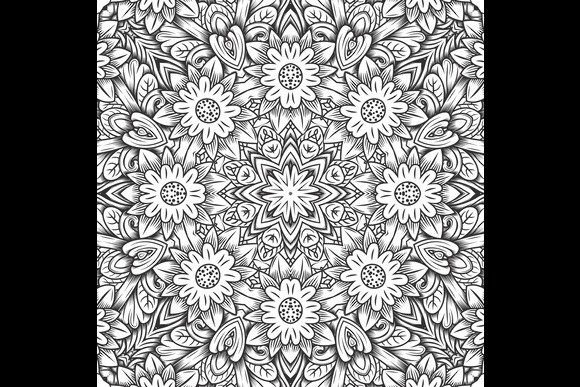
Intricate Patterns to Color
Coloring isn’t just for kids anymore—and “Intricate Patterns to Color” reflects that shift with purpose. These aren’t simple outlines or cartoonish shapes. They’re carefully composed, high-resolution designs built for attention, intention, and artistry: mandalas with layered symmetry, botanical motifs with delicate petal repetition, geometric lattices that invite precision, and interwoven flourishes that reward slow, mindful engagement. Each pattern balances complexity with clarity—detailed enough to hold focus, legible enough to color confidently, whether you’re using fine liners, colored pencils, gel pens, or digital brushes.
Why This Matters—Depending on Who You Are
What makes a coloring page valuable changes dramatically based on your daily reality. A freelance graphic designer might open these files looking for texture inspiration or vector-ready motifs to adapt into branding assets. A teacher planning a mindfulness unit for middle schoolers may scan the same ZIP file for patterns that build fine motor control *and* spark conversation about radial symmetry in nature. A small business owner launching a wellness subscription box could evaluate how well the 3600×3600 pixel resolution holds up when printed on premium cardstock—or whether the clean lines translate smoothly to laser-cut stencils.
For Beginners: Clarity Over Complexity
If you’re new to detailed coloring, “Intricate Patterns to Color” offers a gentle on-ramp—not because the designs are simple, but because they’re logically organized. Symmetry acts as an anchor: once you understand one quadrant of a mandala, the rest follows predictably. Flowers bloom in repeating petal counts. Geometric borders use consistent spacing and rhythm. That structure reduces guesswork. You don’t need advanced shading techniques to feel successful—just steady hands and curiosity. Try starting with Design #7 (a daisy-like mandala with bold outer rings) or #14 (a tessellated hexagon grid). Both let you experiment with color blocking before moving to gradients or layering.
For Experienced Colorists: Depth, Not Just Detail
Veteran colorists often seek nuance—not just more lines, but smarter ones. These patterns include subtle variations in line weight, intentional negative space for contrast, and overlapping elements that create implied depth. Notice how Design #3 layers vine motifs so foreground leaves partially obscure background stems. Or how Design #19 uses concentric circles with staggered breaks to suggest motion. At 300 DPI and 3600×3600 pixels, every curve stays crisp—even when zoomed in for digital coloring or enlarged for framing. That fidelity matters if you’re preparing work for print publication or client presentations.
For Creators & Educators: Flexibility Built In
Designers, illustrators, and educators don’t just color—they repurpose. The ZIP includes 20 unique PDFs, each isolated and scalable. No watermarks. No embedded fonts locking you in. That means you can extract a single floral motif from Design #11 and drop it into a lesson slide about Fibonacci sequences. A surface pattern designer might import Design #8 into Procreate, recolor its base palette, then tile it seamlessly for textile mockups. An art therapist could print Design #16 at half-size for younger clients or double-size for group mural projects—knowing the resolution won’t blur or pixelate.
For Small Business Owners & Marketers
Commercial use is where practicality meets strategy. These files support multiple revenue paths without licensing friction: printable coloring books sold via Etsy or Shopify, downloadable lead magnets for email lists, branded workshop handouts, or even SVG conversions for Cricut users. Because each design is self-contained and high-res, you avoid costly redesigns when shifting formats—no need to retrace lines for web vs. print. One educator used Design #5 (a sunburst mandala) as the centerpiece of a paid “Focus Flow” webinar series; another turned Design #12 (a lattice of interlocking triangles) into a limited-run greeting card line. The consistency across the set also builds visual cohesion across product lines.
What You Actually Get—No Guesswork
You receive one ZIP file containing 20 distinct pattern designs—all delivered as individual PDFs. Each is sized to 3600×3600 pixels at 300 DPI. That’s not arbitrary: it’s large enough to print at 12×12 inches with gallery-quality sharpness, yet optimized for fast download and reliable opening across devices (Mac, Windows, iPad, even some Android tablets with PDF support). There’s no software lock-in. No subscription. No hidden layers or password protection. What you see in the preview is exactly what you get—clean vector-aligned lines, balanced density, and thoughtful negative space that gives colors room to breathe.
Priorities Across Use Cases
- Ease of use: PDF format works instantly in Preview, Adobe Acrobat, or browser tabs—no special apps needed.
- Quality: 300 DPI ensures crisp output whether printed on home inkjet paper or professional matte stock.
- Flexibility: Individual files mean you can share just Design #10 with a student, license Design #17 for a client project, or batch-process all 20 for social media teasers.
- Creativity support: Symmetry and repetition aren’t constraints—they’re scaffolds. They free mental bandwidth for color choices, blending techniques, or compositional risk-taking.
- Long-term usefulness: Unlike trend-driven clipart, these foundational patterns—mandalas, florals, geometry—remain relevant across seasons, platforms, and teaching standards.
Does This Fit Your Next Step?
Ask yourself: Do you need coloring pages that grow with your skill—or stay useful across roles? If you’ve tried free downloads only to hit blurry edges or inconsistent spacing, this set solves that quietly. If you’re building a resource library—not just for today’s project but next year’s curriculum or client pitch—you’ll appreciate the uniform quality and intentional variety. And if you value time over novelty, knowing all 20 designs are ready-to-use (no tracing, no resizing, no troubleshooting) adds up to real efficiency.
“Intricate Patterns to Color” doesn’t promise transformation. It offers reliability—with room for interpretation. Whether you’re unwinding after a 12-hour workday, prepping materials for a classroom of 30, or developing a signature aesthetic for your brand, the value lies in what the patterns allow you to do next—not just how they look on the page.